

Learn how to be more productive as a student with proven study systems, time management tips, and focus techniques for better grades in 2026.
Students in Pakistan today face many distractions due to the digital age (smartphones/social media), coaching pressures & exam pressure, and as a result they often find it difficult to focus & be productive. As a result, many students study harder but still don’t get better results.
This comprehensive guide combines proven study methods, time management strategies, and useful tools to help students succeed..
After reading this article you will understand how the best-performing students create great study habits and how to implement this same system into your daily routine.
- What does Student Productivity Mean?
- The Science Behind Student Productivity
- Why Many Students Have A Hard Time Being Productive
- The Productivity System Every Student Should Follow
- 1. Time Management System for Students
- 2. Focus System (Pomodoro Technique)
- 3.Stop Procrastination While Studying
- 4. Academic Study Goals for Students
- 5. Build a Distraction-Free Study Environment
- 6. Best Study Apps for Productivity
- Real Brand Case Study: Coursera Learning System
- Daily Productivity Routine for Students
- Common Mistakes That Reduce Productivity
- How to Track Your Productivity and Measure Progress
- FAQs (People Also Ask)
- Conclusion
What does Student Productivity Mean?
Student productivity is not about studying for long hours. It is about:
- Completing tasks with focus
- Retaining information effectively
- Managing time without stress
- Avoiding unnecessary distractions
In very simple terms:
Productivity = Output + Focus + Consistency
Someone who studies for 3 very focused hours will typically do better than someone who studies for 8 very distracting hours.
The Science Behind Student Productivity
Many students think that being productive depends on how motivated they feel.. Studies in cognitive science show that productivity is more closely tied to daily habits, surroundings and managing energy levels.
No one can maintain peak concentration all day. As time passes it gets harder to stay focused and be productive. Every single distraction is a problem whether it is a message on your phone or a quick talk, with someone . Your brain has to switch gears. This switching process, called context switching hurts your focus and wastes study time.
Students who do well create systems that cut down on decisions and distractions. They don’t wait to feel motivated; they set up routines that make study easier. As time passes, consistently doing things at the same time of every day can assist you in develop solid study habits. Solid study habits allow students to remain focused through boredom and continued to build their skills without needing the motivation to do so.
That’s why it’s better to think of productivity as a skill you can learn not something some students are naturally good, at.
Why Many Students Have A Hard Time Being Productive
Many students find it difficult to manage their studies effectively. This is often the result of poor study systems, lack of planning, and limited access to effective learning strategies rather than a lack of talent or potential.
Let us start with the things that affect students the most:
1. Many Digital Distractions
Students use things like TikTok, Instagram and YouTube and this makes it hard for students to pay attention. Students get distracted easily by these things and it is hard for students to focus on their school work when they are using these things.The amount of concentration a student can give to an item is significantly diminished due to the usage of these applications.
2. Lack of Study Planning
Students, in Pakistan usually study without a plan. They do not follow a schedule, which makes it hard for them to stay on track.
3. Exam Pressure Without Strategy
A lot of students who are taking their Matric and FSc exams just try to memorize things of really understanding them.
4. Sleep Patterns and Routines
Students without sleep patterns or routines will be less likely to retain information and have a harder time concentrating
The Productivity System Every Student Should Follow
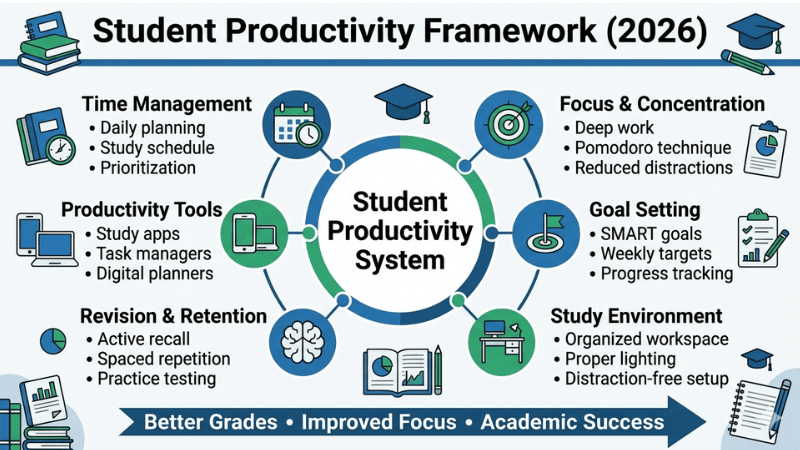
Instead of random tips, you need a structured system.
1. Time Management System for Students
Students who are on top of their game do not just wing it. They use a plan that keeps them organized helps them meet deadlines and makes progress in school. A simple plan for managing time can lower stress. Boost productivity all week.
Effective productivity starts with proper planning. Read our Time Management for Students guide to learn practical strategies for organizing your study schedule.
Daily Study Blocks Method
Breaking down the day into blocks for studying can make learning easier and more productive
- Morning: Go over material you studied before
- Afternoon: Learn things and finish lessons.
- Evening: Try practice questions and test how well you understand.
This way you have a routine that helps with both learning and reviewing.
Effective productivity starts with proper planning. Read our Time Management for Students guide to learn practical strategies for organizing your study schedule.
Priority Rule (80/20 Principle)
The 80/20 Principle says that a few tasks often give the results. Students can use this by focusing on subjects, important topics and areas they are weak in, before moving on to less important tasks. Prioritizing helps make the most of study time and do better in school. Time management is key here. Students should manage their time well.
2. Focus System (Pomodoro Technique)
Staying focused for a time can be tough especially with all the distractions around. The Pomodoro Technique is a way to get things done that helps students stay focused without feeling stressed.
How It Works
- Study, for 25 minutes
- Take a 5-minute break
- Do this four times
- Then take a break of 15–30 minutes
Why It Works
The Pomodoro Technique helps you study with focus while avoiding tiredness. It can help you concentrate better do procrastination and make big study tasks feel easier to handle with Pomodoro Technique. By breaking study sessions into focused intervals followed by short breaks, students can stay productive without feeling overwhelmed. If you want a step-by-step guide, explore our detailed article on Pomodoro Technique for Students.
3.Stop Procrastination While Studying
Procrastination is a problem for students. Lots of students put off work because they feel stuck or do not know where to begin.
There are several factors that contribute to delays in studying, including feeling overwhelmed and unsure of how to approach the task of studying. If you often delay studying or struggle to get started, read our complete guide on How to Stop Procrastination While Studying to learn practical strategies for overcoming distractions and building consistent study habits.
One way to alleviate those feelings is by breaking studying down into manageable pieces.
Practical Solutions
You can follow a rule: start studying right away for just two minutes.
- Keep your phone in another room while you study.
- Break up assignments into smaller things you can do one at a time.
- Give yourself goals to reach, like answering five multiple choice questions or reading two pages.
When you start with things it is usually easier to keep going with your studying without feeling like it is all too much.
4. Academic Study Goals for Students
Students become more productive when they have clearly defined academic goals. Clearly defined goals will provide students with direction, increase their level of focus on their studies, and also allow them to track their progress over time.
Specific, Measurable, Achievable, Relevant, Timed Goals
- Specific: Finish the chapter of your Biology book
- Measurable: Answer 50 questions
- Achievable: Set goals that you can really achieve
- Relevant: Focus on what you need to know for your exams
- Time-bound:** Finish your work within two days
Using SMART Goals will aid students in achieving their goal of staying motivated, as well as in managing their time for studying effectively.
5. Build a Distraction-Free Study Environment
The place where you study is really important for getting work done. You can have the ways of studying but if the things around you are always distracting you it will not work as well.
1. Keep Your Study Area Organized
When your desk is clean it helps your mind feel more clear. You can pay attention to what you are doing.
2. Reduce Digital Distractions
Turn off things that’re not important on your phone and keep things like Facebook closed when you are studying.
3. Use Proper Lighting
light helps your eyes not get tired and you can focus better when you are studying for a long time.
4. Study at the Same Place Consistently
If you always study in the place your brain will start to think that this place is for learning and paying attention.
Small changes in your study environment can make a difference, in how well you can focus and learn.
6. Best Study Apps for Productivity
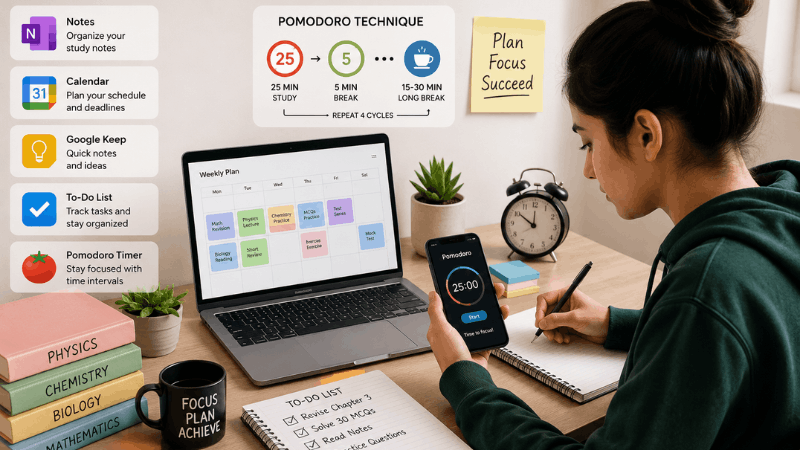
When using technology appropriately, students can keep themselves organized, focused and very productive while studying and this is done by the correct applications that simplify your note taking, planning, and study management.
Recommended Study Tools
- Note-taking apps (for summaries)
- Timer apps (Pomodoro support)
- PDF readers (for digital books)
- Task planners (daily schedules)
These tools can help you develop study habits and make it easier to stay on track all year long. Students can use tools such as Google Calendar to organize study schedules and manage deadlines more effectively.
The right study apps make it easier to manage notes, plan study sessions, and track academic progress. For a complete list of free and AI-powered tools, check out our guide on Best Study Apps for Students in Pakistan.
Real Brand Case Study: Coursera Learning System
Coursera provides an excellent example of structured learning systems used worldwide.
What students can learn from Coursera:
- Courses are divided into weekly modules
- Each module has clear goals
- Progress tracking keeps learners consistent
- Short video lessons improve focus
Key Takeaway:
Top learning platforms don’t rely on long lectures—they rely on structured micro-learning systems, which students can apply in their own study routine.
Daily Productivity Routine for Students
Morning: (Memory Refresh Phase)
- 30 min revision
- Review previous day notes
Afternoon: (Deep Learning Phase)
- Focused study session (Pomodoro cycles)
- Learn new topics or difficult chapters
- Short breaks between study cycles
This is the most productive time for deep concentration tasks.
Evening: (Practice & Application Phase)
Practice questions
Test yourself
Night: (Planning & Light Revision)
- Plan next day study goal
- Light revision only
This routine matches the natural energy cycle of most students.
Common Mistakes That Reduce Productivity
Most students do not fail due to lack of intelligence, but due to avoidable habits that reduce efficiency.
- Studying without breaks
- Multitasking with mobile phones
- Ignoring revision
- Last-minute cramming
- No weekly planning
Avoiding these mistakes alone can improve performance significantly.
How to Track Your Productivity and Measure Progress
A lot of students study every day. They never think about if what they are doing is really working. You can also find ways to make things better.
Use a Weekly Review System
At the end of each week you should ask yourself some questions.
- What subjects did you spend the time on?
- What topics are still hard for you?
- How many of your study goals did you actually finish?
Monitor Study Hours Carefully
Do not just think about how hours you studied. Think about how hours you actually paid attention. Sometimes three hours of focusing on your work is better than six hours of studying when you are not paying attention.
Celebrate Small Wins
When you finish a chapter or your test scores get better or you study every day for a week that is progress. It is an idea to recognize when you do something well. It helps you stay motivated for a long time.
FAQs (People Also Ask)
What is the best way for students’ productivity?
Using structured study systems, such as time blocking, pomodoros, and goal-setting make student more productive than random study habits.
What do students do first to stay productive?
Morning review of material, focused study time blocks followed by evening practice and breaks in between each study session.
What are some effective ways for students to study?
For this category of active recall, spaced repetition, and the pomodoro technique are very productive ways to study.
Conclusion
A successful student does not necessarily have to work harder, but instead must develop a system that allows them to work smarter.
By using time management strategies, being focused on their tasks, looking ahead to set reasonable goals, and utilizing consistent habits/routines, academic success will happen on its own.
The bottom line:
Consistency beats motivation every single time.